• 12 results

The goal of this course is to introduce the main concepts and challenges of quantum computing, a new set of technologies and techniques that promise to solve hard computational problems.


a quantum circuit

Computational physics plays a central role in all fields of physics, from classical statistical physics, soft matter problems, and hard-condensed matter. Our goal is to cover the very basic concepts underlying computer simulations in classical and quantum problems, and connect these ideas to relevant contemporary research problems in various fields of physics. In the TD’s you will also learn how to set, perform and analyse simple computer simulations by yourself. We will use Python, but no previous knowledge of this programming language is needed.

Que ce soit pour la modélisation, l’acquisition ou l’analyse de donnée, l’informatique est devenu un outil indispensable pour tout scientifique. L’objectif principal de ce cours est d’apprendre à utiliser les techniques permettant de manipuler les données. 

La plupart des théories physiques sont exprimées sous forme d’équations à dérivées partielles, que ce soit en mécanique quantique, mécanique des solides ou des fluides, ou encore en physique des plasmas ou en astrophysique.

The development of animals, starting from a single cell to produce a fully formed organism, is a fascinating process. Its study is currently advancing at a rapid pace thanks to combined experimental and theoretical progress, with yet many fundamental questions remaining to be understood. 
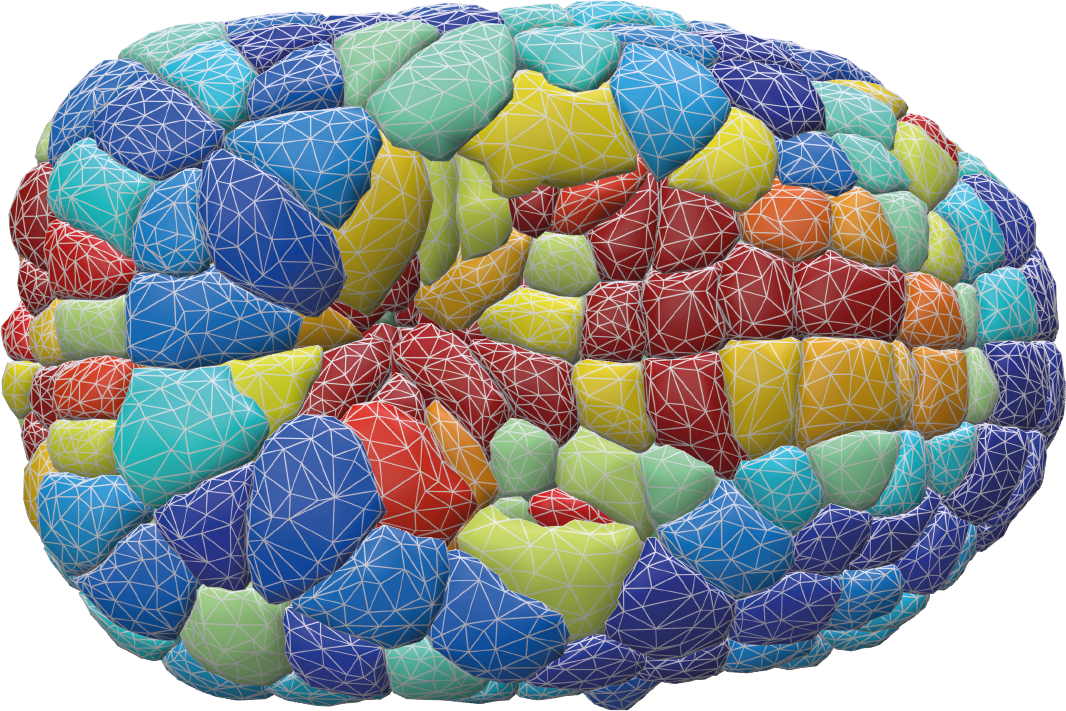
This course will address the fundamental theoretical concepts underlying the self-organization of multicellular systems, from genetic regulation to the mechanics of active biological materials. The course will be based on various concepts of theoretical physics: dynamical systems, soft an active matter, mechanics of continuous media, numerical modeling, etc.