

- 641 résultats
Comment préparez son séjour à l'École Normale Supérieure?
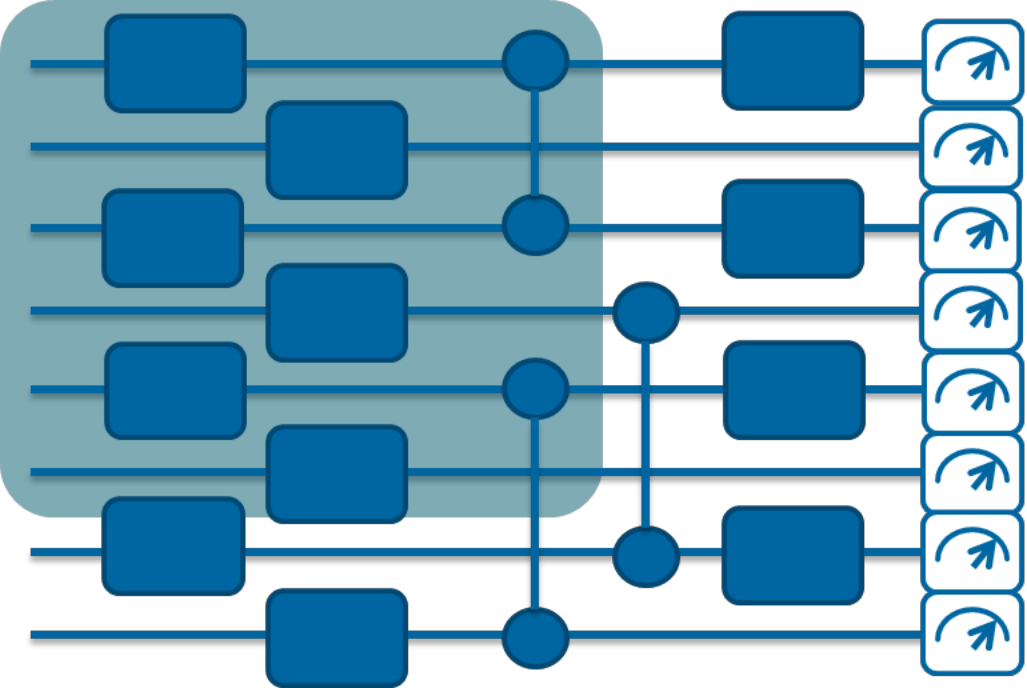
The goal of this course is to introduce the main concepts and challenges of quantum computing, a new set of technologies and techniques that promise to solve hard computational problems.
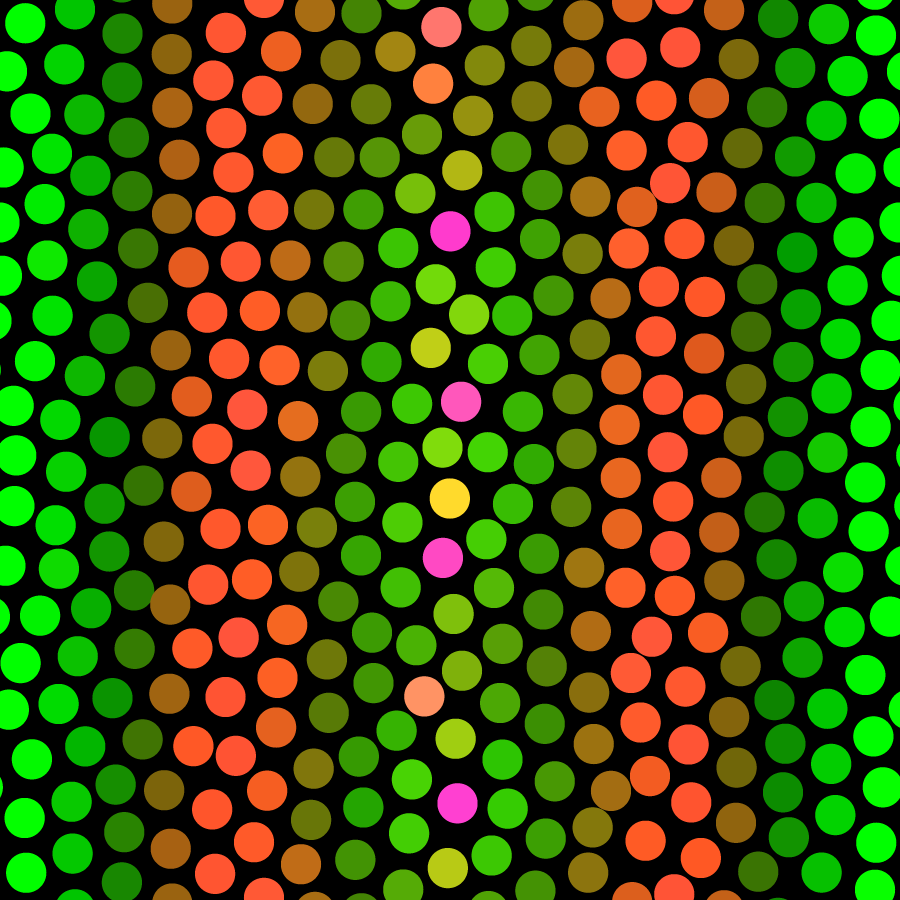
The aim of this lecture is to provide a description of quantum transport in disordered systems, with an emphasis on important phenomena like weak localization, Anderson localization and the Anderson metal-insulator transition. During the lecture, a number of important theoretical tools needed to describe quantum particle scattering in the presence of spatial disorder will be introduced in a pedagogical fashion, such as the Green's function technique, diagrammatic approaches to weak localization and transfer matrices. The lectures will be also illustrated by experimental examples and tutorials, especially taken from the physics of quantum gases and condensed matter.
Atoms and photons are the quantum probes that enable some of mankind’s most precise measurements.
Since the 80’s, laser cooling has enabled the production of sub-milliKelvin dilute atomic gases - which can be further cooled to the nanoKelvin regime.
The aim of this course is to present a selection of advanced topics in classical gravitational dynamics.
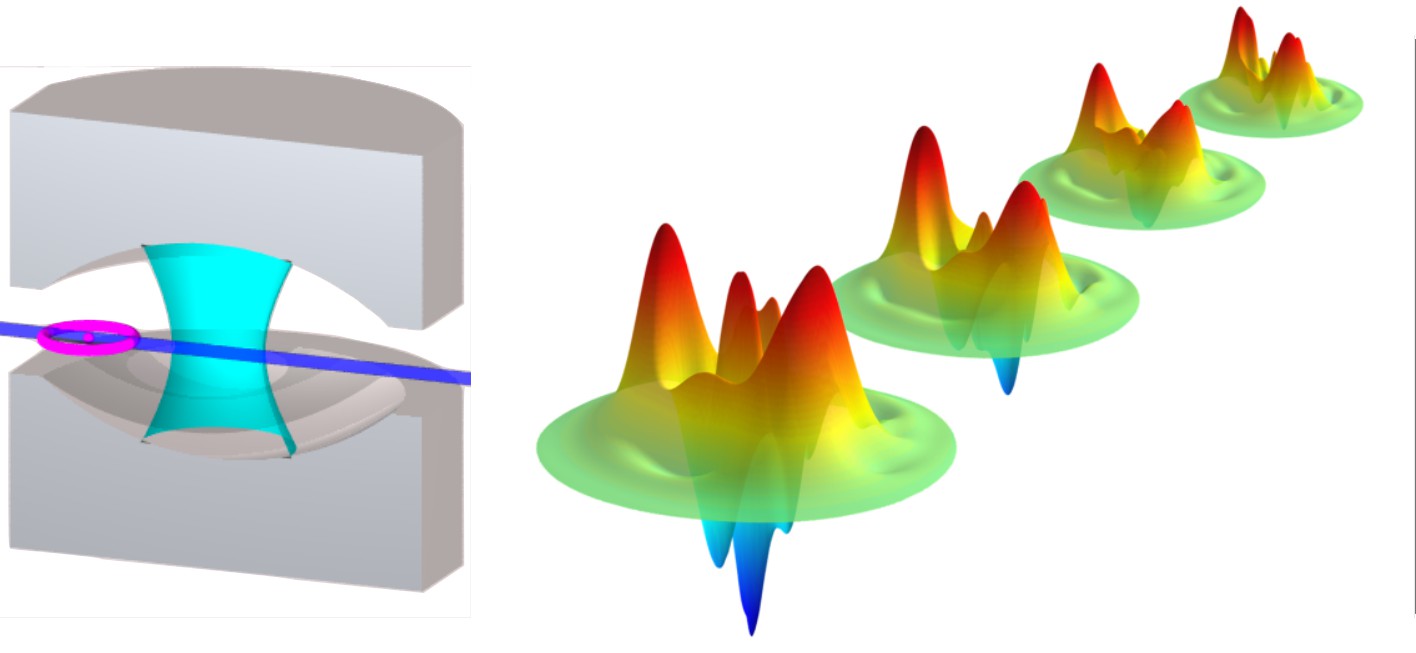
Ce cours vise à décrire l'interaction entre la matière quantique dans sa forme la plus simple, un atome, et un champ électromagnétique. Une approche semi-classique, où le champ est classique, est d'abord considérée, en incluant la relaxation de l'atome. Nous procédons ensuite à la quantification du champ électromagnétique et décrivons sa relaxation, avant que son interaction avec un atome ne soit étudiée dans un modèle quantique complet.
« La chétive pécore, s’enfla si bien qu’elle creva ». « Je plie, et ne romps pas ». While taking inspiration from the living, La Fontaine noticed examples of organisms – frog and reed – that deform strongly, sometimes beyond unrecoverable limits.
Turbulent flows are present all around us and are crucial in fields such as aeronautics, industry, meteorology, astrophysics, climate.
The development of animals, starting from a single cell to produce a fully formed organism, is a fascinating process. Its study is currently advancing at a rapid pace thanks to combined experimental and theoretical progress, yet many fundamental questions remain to be answered.
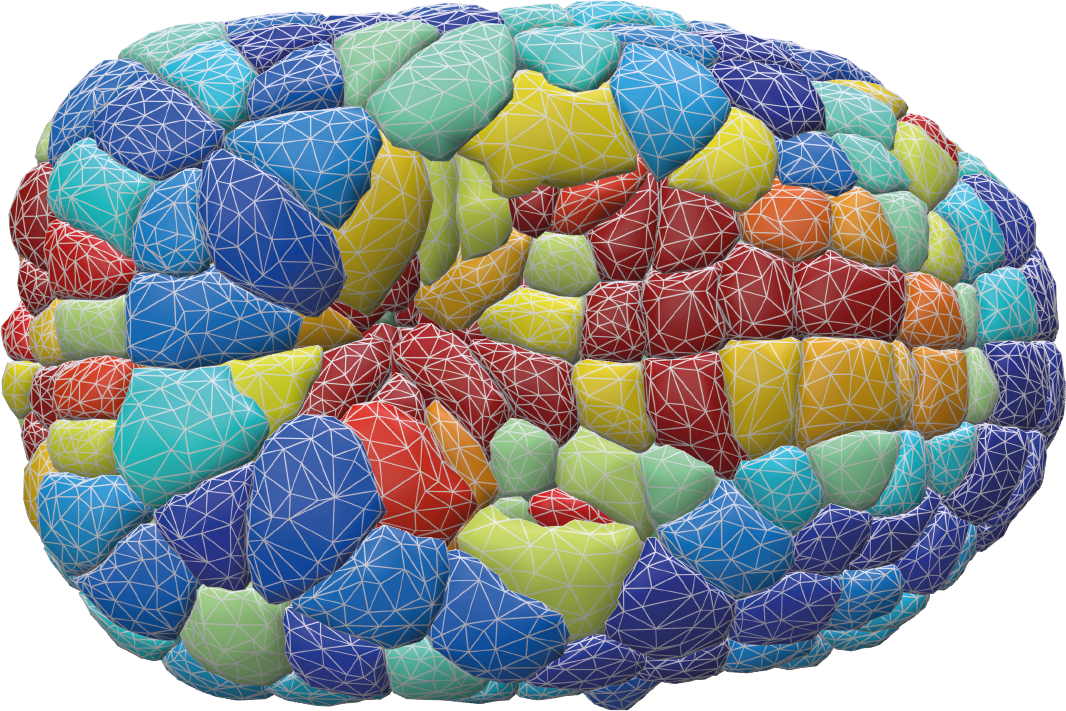
This course will address the fundamental theoretical concepts underlying the self-organization of multicellular systems, from gene regulation to the mechanics of active biological materials. The course will be based on various concepts from theoretical physics: dynamical systems, soft and active matter, the mechanics of continuous media, numerical modeling, etc.